


Contractor quote pressure
A contractor quote of $2,800 just for studs made the usual remodel path hard to justify before finishes, hidden door hardware, and arcade pieces.
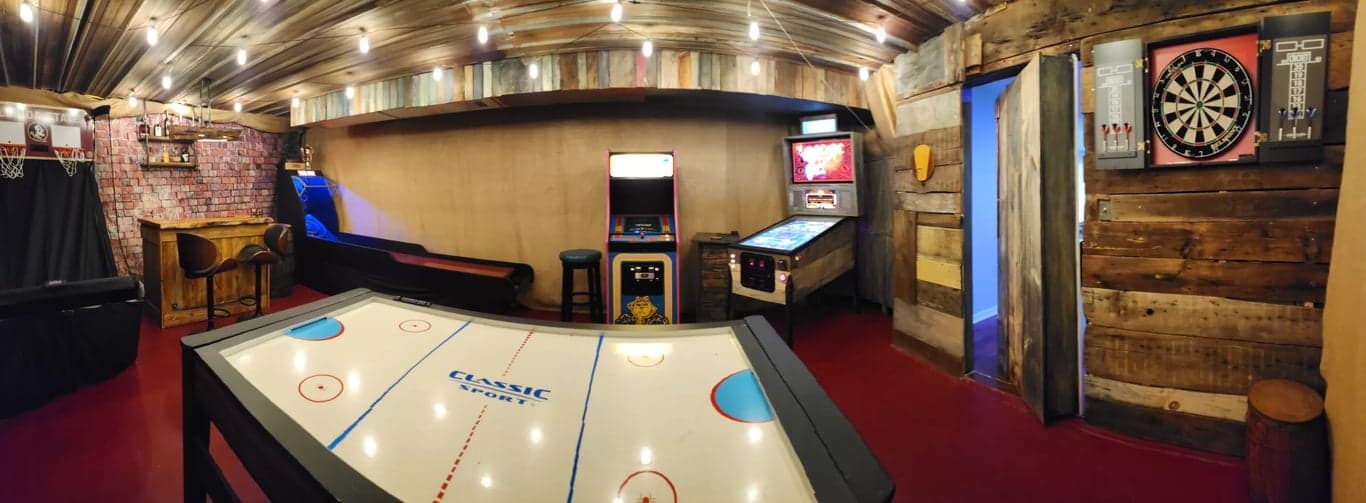
A hidden basement room built from practical DIY projects: a bookcase door, spalted maple bar, reclaimed beam light, textured walls, painted concrete, and a virtual pinball cabinet.
When we bought the house, I traded the office for permission to do whatever I wanted with the unfinished basement storage room. It had exposed joists, bare concrete, and white insulation that looked more like a warning than a design direction.
A contractor quote of $2,800 just for studs made the usual remodel path hard to justify before finishes, hidden door hardware, and arcade pieces.
Instead of drywalling everything, the room uses burlap, faux brick, reclaimed wood, metal, and warm lighting to make basement limitations feel intentional.
This is the site differentiator: hidden-door DIY, bar building, lighting, finishing, and virtual pinball all meet in one place.
Hub and spoke map
The secret door sets the entire room in motion. It hides the arcade, makes the reveal memorable, and became one of the most important projects on the site.
The bar is the room center of gravity: a warm slab, a place to gather, and the piece that makes the arcade feel like a hidden basement tavern instead of storage space.
A reclaimed beam overhead light turns the ceiling into part of the room. It adds warm direction, shadow, and a handmade signal the second the door opens.
The floor had to be durable, budget-aware, and basement-friendly. Epoxy paint made the space cleaner and more finished without pretending it was a luxury remodel.
Burlap, faux brick, weathered board, and reclaimed texture covered the white insulation problem and gave the room its hidden-speakeasy mood.
The corrugated ceiling solved unfinished joists, wiring mess, and industrial style at the same time. It is practical, reflective, and very forgiving.
The pinball build is the major game-room payoff. It turns the speakeasy from a themed basement into the real entertainment environment behind the door.
Build order
Build the hidden door first so the whole room has a story. The best version of this project is not just a door, it is a reveal.
Handle the basement surfaces next: floor, ceiling, wall texture, and lighting. These choices make the room feel intentional before the fun objects arrive.
Add the bar, shelving, stools, and storage zones. This is where the space starts behaving like a usable room instead of a collection of projects.
Bring in the virtual pinball cabinet, arcade pieces, game lighting, and practical power planning once the room can support them.
Arcade strategy
Cabinet hardware, playfield displays, haptics, software, and arcade lighting keep changing. The news desk tracks those updates; this room shows where the decisions eventually have to work.
Use this when the reader is deciding between a kit, a prebuilt cabinet, or a true DIY build.
Display decisions are one of the most expensive and visible parts of a pinball cabinet.
The hidden door remains the story trigger that makes the arcade feel like a reveal.
Follow current cabinet hardware, software, event, and table updates—then return here when the build decision matters.
Useful Amazon Finds
The room is mostly built through larger DIY decisions, but small finishers still matter: faux brick, burlap texture, warm lighting, and bar-top cleanup gear.
As an Amazon Associate, I earn from qualifying purchases at no additional cost to you.
Questions before you open the door
A budget-conscious DIY basement speakeasy can often land around $1,000-$3,000 before arcade machines, depending on how much of the room already exists. My major savings came from doing the hidden bookcase door, bar, lighting, flooring, and wall treatments myself instead of hiring the whole renovation out.
Start with the hidden door and room shell. The door creates the story, while the floor, ceiling, lighting, and walls make the space usable. After that, add the bar and arcade equipment so you are not working around finished machines while sanding, painting, or wiring.
Yes, if you respect the constraints. Basements need moisture-aware flooring, reachable electrical decisions, warm lighting, and surfaces that hide imperfections without trapping access. The speakeasy style works well because reclaimed wood, metal ceiling panels, burlap, and faux brick are forgiving materials.
The hidden bookcase door is the transition piece. It turns the arcade from a room with games into a reveal: you open the shelf, step into BarKode, and the bar, lights, pinball cabinet, and handmade details make sense together.
Virtual pinball is worth it when you want one cabinet that can play many tables and you are comfortable with the software side. A strong cabinet is not a cheap shortcut, but it creates a centerpiece that fits the DIY arcade story better than a random screen on a wall.
As an Amazon Associate, I earn from qualifying purchases. Affiliate links are added only where they fit the project context, and they do not change the price you pay.


